A research-backed look at how artificial intelligence can support – not replace – the work of sport psychologists and CMPCs in athlete mental performance.
A Growing Mental Health Access Crisis in Sport
Athletes face unique psychological pressures, such as performance anxiety, identity disruption, injury recovery, and complex team dynamics, yet access to qualified mental performance professionals remains severely limited. Nearly 50% of individuals who need mental health support are unable to access therapeutic services, making Artificial Intelligence’s 24/7 availability one of its strongest assets. AI is emerging as a potential bridge, but it comes with real risks that athletes must understand.
TOOL VS THERAPIST
The fundamental question is not whether AI can offer similar tools as a sport psychologist. It clearly can. The question is whether those capabilities are safe, equitable, and appropriately bounded. Current research suggests: AI is a powerful tool that is poorly suited as a standalone intervention.
“ Inclusion of a mental health professional would certainly be crucial, utilizing AI as an adjunct in a supportive capacity to the professional.– American Orthopaedic Society for Sports Medicine
Proven & Promising Benefits
When used appropriately, AI tools can extend the reach of sport psychology services and enhance the work of certified practitioners. Here’s where the research shows real promise:
Data Collection & Pattern Recognition:
AI analyzes inputted data, like HRV and performance reflections, to track patterns a CMPC would miss between sessions. This gives sport psychologists a richer athlete profile.
24/7 Accessibility:
Athletes experience mental blocks and performance slumps outside of their weekly mental training session. AI tools can provide immediate, practical support (breathing exercises, visualization cues) when their mental performance coach isn’t available.
Personalized Mental Training Programs:
AI can analyze an athlete's schedule, goals, past performance data and preferred modalities to suggest a structured mental skills training plan.
Pre-Session Intelligence for Practitioners:
Data collected by AI tools, like mood tracking, journaling, readiness scores, shared with a sport psychologist enables richer, more targeted sessions and faster identification of areas needing attention.
Critical Weaknesses & Risks
The same research that highlights AI’s promise reveals serious limitations, particularly when AI tools are positioned as replacements rather than supplements for human practitioners.
LLMs Express Stigma Toward Mental Health Conditions:
Research shows that across multiple chatbots, AI systems demonstrate measurable stigma toward people with mental health conditions, violating a core requirement of effective therapeutic relationships.
No Capacity for Challenge:
Effective mental perfromance training requires both validation and challenge. Chatbots validate readily but fail to challenge beliefs, interrupt cognitive distortions, or push back on unhealthy patterns. Without this dialectical exchange, athletes may stagnate or feel falsely reassured rather than growing.
High Risk of Bias in AI Models:
A Sports Medicine review found 98% of sports AI models carry a high risk of bias due to small, non-representative sample sizes. Models trained on elite, predominantly male athletes may produce misleading recommendations for youth, female, or para athletes.
The Harmony Model
SPORT PSYCHOLOGIST + AI: BETTER TOGETHER
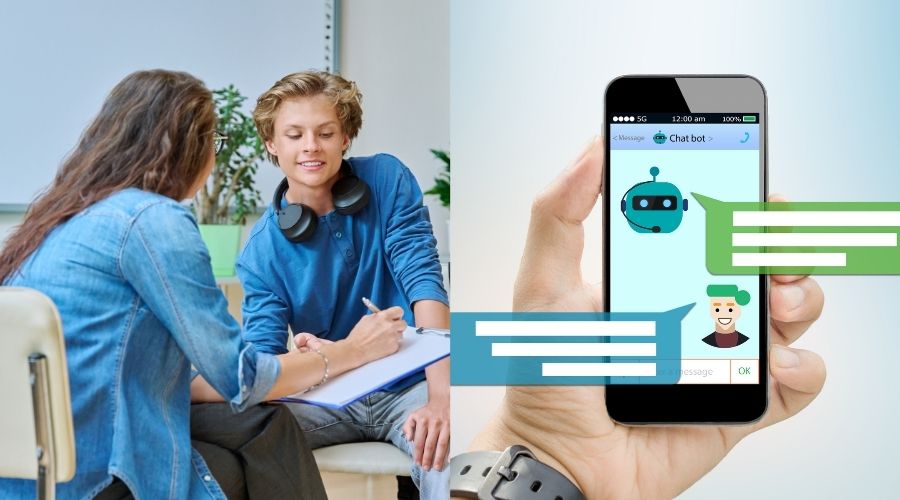
The most effective model isn’t AI or human practitioners – it’s a structured collaboration between the two. Here’s how roles divide in an integrated mental performance framework:
| MENTAL PERFORMANCE COACH | AI CHATBOT |
|---|---|
| Clinical assessment & diagnosis | Daily mood & readiness check-ins |
| Therapeutic challenge & belief reframing | Structured mental skills practice (breathing, visualization, focus training) |
| Interpreting AI-collected data with clinical judgment | Pre-session data collection and journaling |
| Building the therapeutic alliance (trust, empathy) | Personalized practice schedule recommendations |
| Long-term developmental planning | Between-session skill reinforcement |
Bottom Line
AI can make good practitioners better. It cannot make a non-practitioner into a therapist. The goal is not to replace the therapeutic relationship—it is to extend its reach, depth, and continuity.