
Mental Performance Coaching & Sports Psychology in Omaha, NE
Mental Performance Coaching for Omaha Athletes
MindBalanceSPORT is a mental performance coaching practice that works with Omaha athletes by secure video. Our coaches help athletes handle pressure, stay locked in through long seasons, and build confidence that holds from the first pitch to the final match.
Coaching follows The MBS Approach, our evidence-based, five-stage framework: a coach matched to your athlete’s sport and goals, the MBS Mindset Assessment to set a baseline, skills training, integration into competition, and ongoing refinement. Our certified and credentialed mental performance coaches, many of them former college athletes and coaches, are supervised by a licensed clinical psychologist.
From Metro Conference standouts to college and elite competitors, we tailor the work to each athlete, with particular depth in youth and adolescent development. Sessions run by video from our offices in Virginia and Texas.
How It Works
How Virtual Coaching Works for Omaha Athletes
Our offices are in McLean, Virginia and Plano, Texas. Omaha athletes work with us by secure video, with the same coaches, the same MBS Mindset Assessment, and the same five-stage MBS Approach.
Secure video, from wherever you train
HIPAA-compliant video sessions from home, or from any quiet, private space with a good connection, including a hotel room on a tournament weekend. Mental skills work translates well to video, since most of it happens through conversation, guided practice, and what athletes apply between sessions.
Matched by sport, scheduled in Central time
We match your athlete with a coach whose background fits their sport, level, and goals. Omaha is just one hour behind our Virginia office, so after-school and evening sessions are easy to fit around practice and games.
Wondering whether video is the right fit? Read Virtual vs. In-Person Mental Performance Coaching: Which Is Right for Your Athlete?
Omaha Athletes
Mental Skills for Omaha’s Competitive Athletes
Omaha-area athletes compete in the Metro Conference under the NSAA, in club volleyball and select baseball and softball, and on the mat at the state wrestling tournament. It’s a baseball town, too: the NCAA Men’s College World Series comes to Omaha every June, and metro high school programs make deep state tournament runs year after year.
With conference tournaments, showcases, and recruiting conversations stacking up, the pressure can build well before the biggest game of the season.
Our coaches help youth and high school athletes build:
- Composure for Metro Conference and state tournament play
- Focus through doubleheaders, tournament weekends, and long seasons
- Confidence through club tryouts, showcases, and recruiting
- Quick resets after an error, a missed serve, or a tough match
- Routines that generalize from the field to the classroom
Coaches who know the game: two of our coaches played college baseball and another founded a mental skills camp for young baseball players. Omaha athletes in every sport get the full MBS Approach by video.
Services for Omaha Athletes






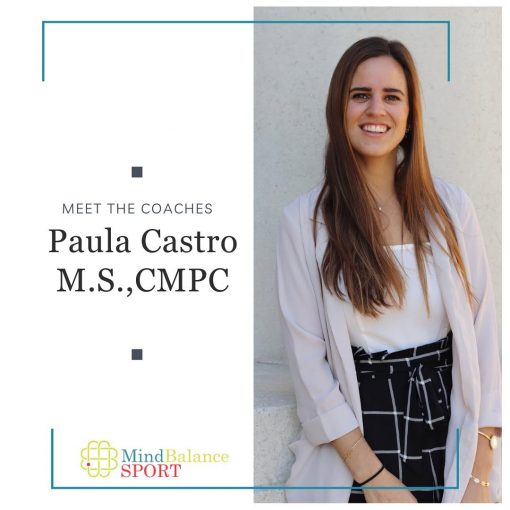
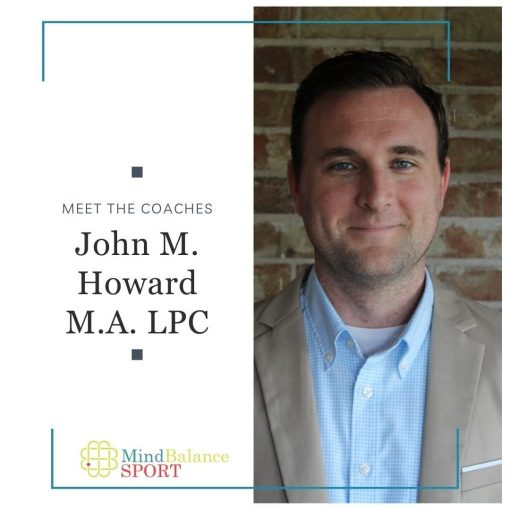
Meet the Team



Google Reviews
What Athletes and Families Say
EXCELLENT Based on 36 reviews
 Posted on Google

 Jennifer ChoMy 12-year old daughter, who plays competitive tennis, has been working with Paula Castro on growing her confidence and mental composure during matches. Paula has changed our mindset about mental training being as important as physical training, as we’ve seen our daughter effectively implement tools and strategies Paula has suggested (especially when she’s down and finds a way to come back). Our daughter has also enjoyed meeting with Paula online, mentioning she’s relatable and engaging. Highly recommend Paula!Posted on Google
 Liv ManningListened to me very thoughtfully and gave me helpful tools. Worked through different scenarios consistently and was always ready with her feedback. Great experience!Posted on Google
 Karissa OliverBeen working with Paula for a month or so now (competitive equestrian) and am so grateful and pleased with her and the Mind Balance process! I was initially somewhat apprehensive about performance coaching, especially as my recent challenges were tied up in a lot of grief and change so was curious how to address and detangle those things. Paula has really helped me separate those concepts and get back to focusing on performance in a tangible, constructive way that doesn’t unduly punish myself or my horse. I would recommend Paula and Mind Balance to anyone looking to improve their sporting performance and already plan to keep Paula in my tool box as long as I’m competing! Thank you for giving me my perspective back!Posted on Google
 Sophia SuarezWe’ve had a wonderful experience working with Matt! He has helped our son develop the mental skills and confidence needed to navigate competitive sports, especially during challenging moments. Matt has given him practical techniques to manage pressure, stay focused, reset after setbacks, and approach competition with a healthier, more resilient mindset. What I appreciate most is that Matt’s techniques are not just theoretical. Our son has actually been able to put them into practice during tournaments, including some incredibly close matches where he previously might have struggled mentally. Recently, he broke a losing streak that had lasted over two months, and we could see a real difference in how he handled himself, both emotionally and mentally. Matt understands that every child responds differently to pressure, and he takes the time to find strategies that genuinely work for each individual. We’re grateful for the progress our son has made and would highly recommend Matt to any family with a young athlete looking to build confidence, resilience, and mental toughness!Posted on Google
 Tyson PettingillMatt has really helped me develop myself on the mental side of not just baseball but life. It has really helped me grow as a person and I can’t wait to keep working with him!Posted on Google
 Rohan ChittellaWorking with Coach Brady at MindBalanceSPORT has been a great experience. As a high level athlete himself, he is able to bring concrete examples and frameworks that I was able to incorporate into my preparations for competition. I look forward to future sessions with him.Posted on Google
 hank rochetteI decided to work with a mental performance coach because I struggled with self-doubt around my race-day performance. I wanted to understand where those doubts came from and learn how to show up with greater confidence, focus, and certainty. Working with Brady has been a game changer. Through our work together, I now approach races feeling more relaxed, confident, and focused. Some of the most valuable tools I've developed include creating an alter ego for race day, understanding the difference between my internal and external scoreboards, and developing my personal pain pledge. These strategies have helped me perform with a stronger mindset and enjoy the process more. If you're looking to show up to your event, game, or race with greater confidence, certainty, and mental resilience, I highly recommend working with a mental performance coach—and Brady has been an outstanding guide throughout that journey.Posted on Google
 Ella ConnorI found my time at MindbalanceSPORT SUPER helpful. I improved a lot with my confidence in my own play and working on taking steps to reset after mistakes and in between points. This helped me achieve a lot more than I thought I would be able to. We were also able to create some impactful morning routines with meditation and mindfulness. I would highly recommend!!Posted on Google
 Nancy YasalonisWhat a great experience! Recently we had Brady Dinnsen work with our volleyball team to discuss various aspects of mental toughness. Some of the topics that were super helpful were Self-talk, Confidence, Next point mentality and Finishing. Brady would be an asset to any team looking to improve in these areas.Posted on Google
 Vicki AnagnostopoulosThis practice is doing amazing things for young athletes. I have had a top notch experience collaborating with providers at Mind Balance Sport. As a psychologist who does a lot of the clinical work with student athletes, the added component of mental performance coaching really catalyzes growth and well-being. I highly recommend.
Recovery
While Everyone Has A Physical Ceiling, There Is No Mental Ceiling.
Exploring the Role of Sports Psychologists in Omaha, NE
Sports psychology is an interdisciplinary field that integrates knowledge from both psychology and kinesiology to understand, predict, and enhance performance in sport. It focuses on the psychological aspects of sports involvement, including motivation, emotions, cognition and social interaction.
This discipline aims at understanding how physiological factors may affect an athlete’s physical performance, as well as how participation in sports can enhance or damage psychological well-being. It also covers how mental strategies can be used to improve training and performance outcomes.
- Motivation and Self-Confidence: This aspect revolves around understanding what drives athletes to engage in sport activities and enhancing their confidence levels.
- Emotion Management: Athletes are trained on how to manage their emotions before, during, and after a game. This allows them to maintain optimum focus on their performance.
- Performance Enhancement: By delving into cognitive processes such as attention control and decision making, psychologists help athletes perform at their peak even under intense pressure.
- Team Dynamics: This area analyzes the interpersonal relationships within a team setting. It focuses on fostering effective communication skills, leadership characteristics, cohesion among team members among others.
Sports psychologists employ various methods to gather data about athletes’ experiences including interviews, observations, surveys and psychophysiological measures like heart rate variability or EEG analysis. They then use this information to develop interventions designed to improve individual or team performances.
It’s worth noting that “psychologist” is a licensed title. A sports psychologist holds a doctoral degree in psychology and a state psychology license, while many mental performance coaches hold the Certified Mental Performance Consultant (CMPC) credential from the Association for Applied Sport Psychology (AASP). When you compare providers, ask which credential each person holds.
The field of sports psychology is an exciting one that offers immense potential for enhancing athletic performance while promoting positive psychological development. Given the increasing emphasis on mental health and well-being in sports, its relevance continues to grow with each passing day. With the right knowledge, understanding, and application of sports psychology principles, athletes can unlock their full potential and thrive in their respective sports.
Enhancing Athletic Performance through Sports Counselling in Omaha, NE
Sports psychology plays a pivotal role in enhancing the performance of athletes. It is an interdisciplinary field that bridges the gap between psychology and sports, helping athletes achieve their optimal performance through different strategies. These strategies work by improving focus, boosting self-confidence, and mitigating the effects of high-pressure situations in athletes.
One key strategy in sports psychology is goal setting. This involves defining clear, measurable, and achievable targets for the athlete. The goals could be related to skill development, physical fitness, or personal growth. By having a clear target to aim for, athletes can increase their motivation and concentration.
- Short-term goals: These are immediate targets such as improving a specific skill within a week or achieving a certain number of minutes in an endurance test.
- Long-term goals: These usually involve big-picture aspirations like winning a regional tournament or being selected for the national team.
Another strategy commonly employed by sports psychologists is mental imagery or visualization. This technique encourages athletes to mentally rehearse their performance before it happens. Athletes can visualize successful outcomes which helps them to build self-confidence and reduce anxiety.
Sports psychologists equip athletes with relaxation techniques to help them manage stress and anxiety during high-pressure situations. These techniques include deep breathing exercises, progressive muscle relaxation (PMR), and mindfulness meditation.
Cognitive-behavioral techniques play a crucial role in helping athletes control their thoughts and emotions effectively. By learning how to recognize negative thought patterns and replace them with positive ones, athletes can better manage stressors that often come with competitive sports.
Biofeedback is an advanced technique where electronic monitoring devices are used to provide real-time information about bodily functions such as heart rate variability and muscle tension levels. Athletes can learn from this feedback to control these functions better, thereby improving their performance.
Developing and maintaining consistent pre-performance and performance routines also contribute to enhancing athletic performance. These routines can help athletes to stay focused and in the right mental state for optimum performance.
In implementing these strategies, it is essential to remember that each athlete is unique and what works for one might not work for another. Therefore, sports psychologists must tailor these strategies to meet the individual needs of each athlete. The end goal of all these strategies is not just about winning; it’s also about helping athletes enjoy their sport, handle stressors effectively, and experience personal growth.
Exploring Performance Psychology in Omaha, NE
Sports psychologists utilize numerous intervention strategies to enhance an athlete’s performance and well-being. These interventions are designed to address various psychological aspects such as anxiety, stress management, motivation, and concentration that impact an athlete’s performance. Let’s delve into a few prominent types of sports psychology interventions.
- Self-talk: Encouraging positive internal dialogues to boost confidence.
- Mental imagery: Utilizing visualization techniques to enhance performance.
- Goal setting: Establishing achievable targets to motivate athletes.
- Breath-focused exercises: To promote calmness and composure.
- Sensory awareness skills: To improve focus and attention.
Biofeedback interventions involve using electronic devices to help athletes gain control over their physiological processes related to stress and anxiety, such as heart rate and muscle tension.
It is important to note that the type of intervention used may vary according to the individual needs of the athlete. It can be tailored based on the athlete’s sport, their level of competition, personal goals, and any specific psychological issues they may have.
By understanding these interventions in sports psychology, athletes can better appreciate the scope of support available to them and how it can contribute towards enhancing not just their performance but also their overall psychological health.
Exploring Sport Performance Training in Omaha, NE and its Impact on Athletes
Engaging with a sports psychologist can yield substantial benefits for athletes, regardless of their level of competition. Sports psychologists can aid in the enhancement of overall performance, help athletes manage pressure and stress effectively, and aid them in overcoming setbacks and injuries.
Find a Sports Psychologist Near Me for Improved Performance
One of the key advantages of working with a sports psychologist is performance improvement. Through various techniques such as goal setting, visualization, and concentration training, sports psychologists assist athletes in maximizing their potential.
- Goal Setting: This involves establishing specific, measurable, achievable, realistic, and time-bound (SMART) goals that provide direction and motivation to athletes.
- Visualization: Athletes are guided to mentally rehearse their performance which helps to build confidence and enhance focus.
- Concentration Training: Various techniques are used to help athletes maintain focus during their performance by managing distractions both on and off the field.
Effective Stress Management
The intense pressure associated with competitive sports often leads to high levels of stress. A sports psychologist provides strategies such as relaxation exercises and mindfulness training that help athletes manage these pressures effectively.
- Relaxation Exercises: Techniques such as deep breathing or progressive muscle relaxation are taught to help reduce physical tension and anxiety.
- Mindfulness Training: This involves training athletes to stay focused on the present moment rather than worrying about past performances or future outcomes.
Overcoming Setbacks
Setbacks such as poor performance or injury can have a significant psychological impact on an athlete. Sports psychologists offer support during these challenging times by helping athletes cope with emotions like frustration or disappointment and guiding them towards a positive path for recovery.
- Coping Strategies: These include cognitive restructuring (changing negative thoughts into positive ones) or distraction techniques (focusing attention away from negative feelings).
- Recovery Support: The psychologist assists in maintaining motivation during rehabilitation from injury by setting recovery goals and focusing on the positive aspects of recovery.
Enhancing Team Dynamics
For team sports, a sports psychologist can play a vital role in enhancing team cohesion and communication. They provide strategies to build trust among teammates, improve communication skills, and manage conflicts effectively.
- Building Trust: Team building activities or group sessions can be used to enhance trust among team members.
- Conflict Management: The psychologist offers mediation in case of conflicts and provides strategies to handle disagreements constructively.
In essence, investing in sports psychology is not just about enhancing performance but also about fostering mental well-being, resilience, and team dynamics. It is an integral part of sports that contributes significantly to the overall growth and development of athletes.
Discovering the Value of a Sports Mental Coach in Omaha, NE
When it comes to investing in sports psychology, many stakeholders, including athletes, coaches, and sports organizations, may be uncertain about the cost involved and the value it brings. In this section, we shed light on these factors to provide a clearer understanding of why sports psychology is worth considering.
Long-Term Benefits and Value
- Improved Athletic Performance: Through mental conditioning techniques such as visualization and self-talk, athletes can enhance their performance on the field. These mental skills are crucial for maintaining high-level performance under pressure.
- Emotional Stability: Athletes often face immense pressure that can lead to stress and anxiety. A sports psychologist helps athletes manage these emotions effectively ensuring better overall emotional health.
- Career Longevity: By helping athletes deal with injuries mentally and get back into form after an injury layoff or defeat, mental performance work can support a longer, more consistent career.
- Team Cohesion: In team sports especially, hiring a sports psychologist can foster positive communication among team members which leads to better teamwork and consequently improved results.
Cost-Benefit Analysis
While understanding the cost associated with hiring a sports psychologist is essential; what’s more important is recognizing its value. It’s not just an expenditure but an investment that yields significant returns in the form of improved performance, emotional well-being, increased career longevity and team cohesion.
In summary, while investing in sports psychology does come with a cost, the potential value it brings to an athlete or a sports team far outweighs the initial investment. Understanding this cost-value relationship can empower stakeholders in sports to make informed decisions about incorporating psychological services into their repertoire.
Exploring the Field of Sports Psychology in Omaha, NE
Sports psychology is an evolving field that combines the principles of psychology and sports science. Despite its growing recognition, several myths and misconceptions impede athletes’ understanding, leading to a lack of appreciation for the discipline. Let’s debunk some of these common misapprehensions about sports psychology.
Contrary to popular belief, sports psychologists are not merely therapists for athletes with mental health issues. While they do address problems like performance anxiety or pressure management, their work extends beyond remedial interventions. They help improve focus, boost confidence, establish solid routines, enhance motivation levels, and fine-tune mental skills crucial for athletic performance.
The benefits of sports psychology apply equally to athletes at all levels – from beginners to professionals. Younger athletes can learn valuable skills in motivation, concentration and effective goal setting from a sports psychologist which can lay the foundation for continued success as they progress in their respective sport.
This misconception often leads people to overlook the scientific basis of sports psychology. The field is not just about motivating or encouraging athletes but involves research-based interventions that consider cognitive processes, emotional responses, behavioral patterns and neurological aspects impacting athletic performance.
Just like physical training programs are tailored based on individual athlete’s strengths and weaknesses; psychological strategies also need customization according to athlete’s personality traits, learning styles, cultural background among other factors. There isn’t a one-size-fits-all approach in sports psychology.
This myth trivializes the role of sports psychologists by reducing it merely to a ‘counseling’ role. In reality, sports psychologists engage in a wide range of activities, including observing practices, analyzing competition performance, conducting workshops or group sessions, and developing individualized mental skills training programs.
This belief can deter many athletes from seeking out the help of a sports psychologist. It is important to understand that acknowledging one’s mental hurdles is not indicative of weakness but rather a strength that will lead to overall improvement.
By debunking these common misconceptions, we can foster a more accurate understanding of sports psychology. Recognizing its value and potential in enhancing athletic performance can contribute to more effective utilization of sports psychology resources and strategies among athletes across all levels.
Areas Served
Frequently Asked Questions from Omaha Families
Does MindBalanceSPORT have an office in Omaha?
No. Our offices are in McLean, Virginia and Plano, Texas, and Omaha athletes work with us by secure, HIPAA-compliant video. They get the same coaches, the same MBS Mindset Assessment, and the same five-stage MBS Approach as athletes who meet in person.
Is there a sports psychologist for Omaha athletes at MBS?
MindBalanceSPORT is a mental performance coaching practice, and our coaches are supervised by a licensed clinical psychologist. Omaha athletes work with a mental performance coach by video on skills like focus, confidence, and composure. Clinical services depend on state licensure rules, so the options for your state are best confirmed with us when you reach out.
How does scheduling work from Omaha?
Sessions are booked in Central time, just one hour behind our Virginia office, so after-school and evening sessions fit easily around practice and games. Share your athlete’s availability when you reach out and we’ll match them with a coach whose schedule fits.
Do you have coaches with baseball backgrounds?
Yes. Two of our mental performance coaches played college baseball, and another founded a mental skills summer camp for young baseball players. We match every athlete with a coach whose background fits their sport, whether that’s baseball, volleyball, wrestling, or anything else.
Do you work with Omaha youth and high school athletes?
Yes. Whether your athlete competes in the Metro Conference, plays club volleyball or select baseball, or wrestles, we work with young athletes on pre-competition nerves, confidence, focus, and handling bigger stages, using age-appropriate mental skills training.
Do you work with Omaha-area teams?
Yes. Team Mental Performance Training helps high school, club, and youth teams build culture, communication, competition readiness, and leadership through virtual workshops and ongoing programs.