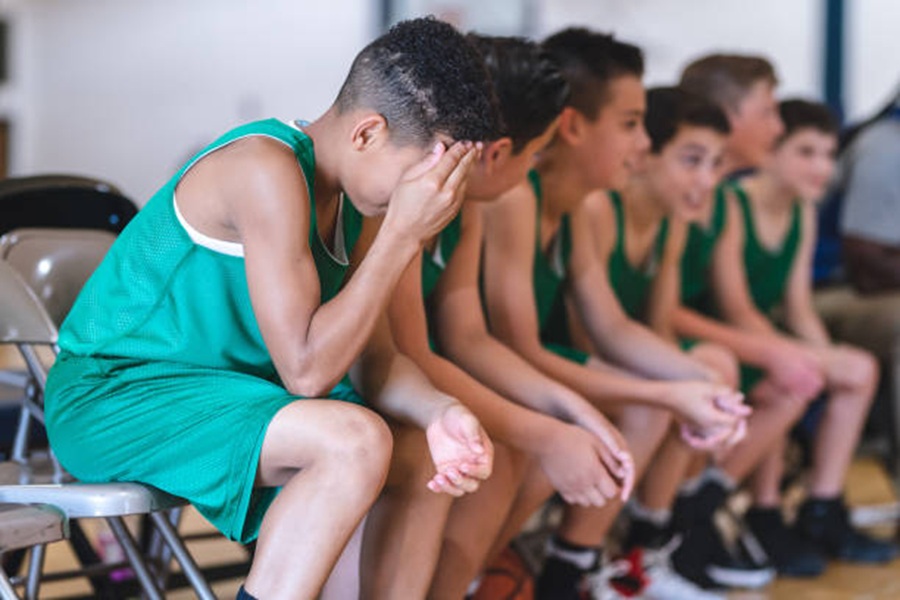
A team mental skills program is a season-long plan that teaches every athlete on a roster the same core mental skills (focus, confidence, emotional control, and communication) and builds them into practice so they hold up in games. Programs that last follow a simple rhythm: a preseason workshop to set a shared language, short in-season touchpoints that coaches lead, and a postseason review to see what stuck.
This guide is for coaches, athletic directors, and club leaders who want more than a one-time motivational talk. It covers what a program should include, how to sequence it across a season, what coaches can reinforce on their own, and what to ask before you bring in outside help.
The short version: mental skills are learnable, research supports teaching them, and coaches are the ones who make them last.
Key Takeaways
- A team mental skills program trains focus, confidence, emotional control, communication, and culture as skills a team practices, not personality traits players either have or don't.
- Sequence it across the season: a preseason workshop, short weekly in-season touchpoints, and a postseason review.
- Coaches carry most of the load. Shared cue words, rehearsed reset routines, and process-focused feedback keep the skills alive between sessions.
- A one-time workshop is a good start, but research on team building suggests gains are more reliable when the work continues for weeks rather than a single day.
- Before hiring, ask who will lead your sessions, what credentials that person holds, how they'll tailor the work to your sport and age group, and how they'll track progress.
Table of Contents
What Is a Team Mental Skills Program?
A team mental skills program is structured, repeated training in the psychological skills behind performance, delivered to a whole team and built into its normal practice week. You’ll also hear it called team mental performance training, sport psychology for teams, or a mental conditioning program.
It isn’t a pep talk, and it isn’t therapy. Think of it the way you think about strength and conditioning: skills are introduced, practiced under increasing pressure, and checked over time. A team that has rehearsed its reset routine dozens of times in practice is much better prepared to use it after a fourth-quarter turnover than a team that heard about it once.
The research supports the investment. A meta-analysis in Sports Medicine found that psychological and psychosocial interventions had a moderate positive effect on sport performance, and that the effect appeared to last at least a month after the intervention ended (Brown & Fletcher, 2017).
A team program works on two layers at once. The individual layer is each athlete’s own focus, confidence, and composure. The team layer is how teammates talk to each other, how the group responds to mistakes, and what the team agrees to stand for. Individual coaching can’t reach that second layer. A team program can.
What Should a Team Mental Skills Program Cover?
A complete team mental skills program covers five areas: focus, confidence, emotional control, communication, and culture.
Each skill shows up on game day in a specific, visible way, and each one can be built with a small habit repeated in practice.
| Skill | What it looks like on game day | A practice habit that builds it |
|---|---|---|
| Focus | Athletes lock in on the next play instead of the scoreboard, the referee, or the crowd. | Give each drill one focus cue (for example, "next ball") and call it during the hardest reps. |
| Confidence | Athletes want the ball late in close games and commit to their decisions. | End practice with each athlete naming one thing they executed well. Confidence grows from noticed evidence. |
| Emotional control | A mistake stays one mistake. The team resets within seconds. | Teach one reset routine (breathe, cue word, next action) and rehearse it after real errors in scrimmage. |
| Communication | Talk stays specific and constant, especially when the team is under pressure. | Assign talk roles in drills, then debrief with one question: "What did we say when it got hard?" |
| Culture and cohesion | Players hold shared standards and pick each other up after setbacks. | Set team goals and standards together in preseason, then revisit them every few weeks. |
Behind those five areas sit a handful of well-studied methods. Attentional control training teaches athletes to narrow and widen focus on demand. Self-talk work replaces “don’t mess up” with instructional cues like “attack the space.” Visualization lets athletes rehearse pressure moments before they happen. Breathing and arousal regulation help athletes settle nerves or raise energy. Goal setting and role clarity give the whole team a shared direction.
A good program doesn’t teach all of these at once. It picks the two or three your team needs most, then layers in the rest as the basics take hold.
How Do You Build Game-Day Confidence Across a Team?
Team game-day confidence comes from preparation athletes trust: a shared pre-game routine, rehearsed plans for pressure moments, and self-talk cues the whole roster uses.
Pep talks raise energy. Routines give athletes something to do with it. A team that walks into a big game with a plan for its first five minutes, and a plan for what happens when it goes down a goal, has less to worry about and more to focus on.
Four pieces make up a strong game-day confidence plan:
- A consistent pre-game routine. The same warm-up sequence, a brief team visualization of the first few plays, and one shared cue word before the start. Same routine for a scrimmage and a championship.
- If-then plans for pressure moments. “If we concede, then captains call the reset and we win the next restart.” Teams that decide in advance don’t have to decide in a panic.
- Instructional self-talk. Cues that name the action (“strong first touch,” “see the whole field”) work better than cues that name the fear (“don’t turn it over”).
- An in-game reset. One routine every athlete knows, used after mistakes, bad calls, and the other team’s scoring runs.
The evidence behind routines is solid. A meta-analysis of 112 effect sizes found that pre-performance routines improved sport performance, including under pressure, and the benefit held across ages, genders, and skill levels (Rupprecht, Tran & Gröpel, 2021).
How Should You Sequence Mental Skills Training Across a Season?
Sequence a team mental skills program in three phases: a preseason foundation, weekly in-season reinforcement, and a postseason review.
The Team Mental Skills Season
1. Preseason
Build the foundation
- Team workshop on the five skills and a shared language
- Team goals and standards, set together
- Baseline check-in for every athlete
- Coach session, plus a parent session for youth teams
2. In-season
Reinforce every week
- Short mental skills block inside practice
- Same pre-game routine before every game
- Reset routine rehearsed after mistakes
- Three-question post-game debrief and regular consultant check-ins
3. Postseason
Review and reset
- Repeat the baseline check-in
- Athlete and coach feedback
- Choose two skills to carry forward
- Leadership work with returning captains
All season: coaches use the same cue words, feedback style, and reset routine in every practice.
Preseason: build the foundation
Preseason is where the team learns the language it will use all year. A 60- to 90-minute workshop introduces the five skills, teaches one reset routine, and gives everyone the same cue words.
Use this window to set team goals and standards together. In a meta-analysis of team-building interventions, programs built on goal setting produced some of the largest effects, and interventions led by coaches were effective too (Martin, Carron & Burke, 2009). Goals the athletes help write are goals they’ll hold each other to.
Run a short baseline check-in before the first game. A few questions on confidence, focus, composure, and team climate give you a starting point to measure against later.
Meet with your coaching staff before the athletes do. Agree on the cue words, the reset routine, and how you’ll give feedback after mistakes. Mixed messages from different coaches undo the work quickly.
For youth teams, hold one session for parents. In a study of youth basketball leagues, athletes whose coaches and parents attended mastery-focused workshops reported less performance anxiety, less worry, and fewer concentration problems by season’s end (Smoll, Smith & Cumming, 2007). When the car ride home uses the same language as practice, the skills stick.
In-season: short, frequent touchpoints
In-season work should be small and steady. A 10- to 15-minute block inside practice, once or twice a week, does more than a long session once a month.
Keep the blocks practical. Run pressure reps with real consequences so routines get tested before game day. Rehearse the reset after actual mistakes, not hypothetical ones. Use the pre-game routine before every game, including the easy ones.
After games, run a three-question debrief: What did we control well? Where did we lose focus? What’s our cue for next time? Five minutes is enough.
If you’re working with a mental performance consultant, in-season check-ins every few weeks keep the plan on track and adjust it to what the season throws at you: a losing streak, an injury to a key player, a rivalry game. Athletes who need more than the team sessions can add individual coaching.
Postseason: review and reset
The postseason review shows you what stuck. Repeat the baseline check-in and compare. Ask athletes which skills they actually used and which cues they still remember. Ask coaches what changed in practice.
Then choose two skills to carry into the off-season and next year’s preseason. Returning captains are a good investment here. Leadership work with them over the off-season means next year’s team starts with athletes who already speak the language.
"When I built the Division I sport psychology program at Virginia Tech, the lesson that stayed with me was how much depended on the coaches. Athletes took the skills seriously when they heard the same language at practice every day, not just from me. A workshop opens the door. The coaching staff keeps it open."
Sample season plan: a youth soccer team
Here’s how the three phases might look for a hypothetical U14 club soccer team over a fall season. Use it as a template, not a script.
| Phase | Team focus | What the coach reinforces |
|---|---|---|
| Preseason (2 weeks before the first match) | Workshop on the five skills, team standards, and one reset routine; parent session | Uses the agreed cue words from the first practice |
| Early season (weeks 1–4) | Focus cues and a pre-match routine | A 10-minute skills block each week; the same routine before every match |
| Mid-season (weeks 5–8) | Composure after conceding; talk under pressure | Scrimmages that start a goal down; assigned talk roles in drills |
| Late season (weeks 9–12) | Confidence for tournament and playoff matches | Team visualization before big matches; a penalty-kick routine |
| Postseason | Review: repeat the check-in; captain debrief | Notes which cues athletes still use without prompting |
The same structure works in other sports with different pressure moments. A lacrosse program might build its routines around faceoffs, man-down defense, and the minutes after the other team’s scoring run. A baseball program might focus on the at-bat routine and the reset between pitches.
Is a One-Time Workshop Enough, or Do You Need a Season-Long Program?
A one-time workshop is a useful start, but mental skills and team cohesion are more likely to last when the work continues across weeks.
A 2024 meta-analysis of 15 studies found that team-building interventions improved cohesion overall, with the strongest effects for athletes aged 15 to 20 and for collegiate teams. Interventions shorter than two weeks did not show a significant effect, and some earlier studies found that cohesion gains faded before the season ended (Kwon, 2024). One good session can spark the work. Repetition is what keeps it.
Each format has a place. The right one depends on how many teams you’re working with and how much coach time you can commit.
| One-time workshop | Season-long team program | Club-wide program | |
|---|---|---|---|
| Best for | Kicking off a season or a focused need, like tournament prep | One team that wants the skills to show up in games | Clubs and athletic programs with many teams and age groups |
| Format | A single 60- to 90-minute session | Preseason workshop, in-season practice touchpoints, regular check-ins, postseason review | Coach education, a shared language across teams, age-appropriate team sessions, parent education |
| What it builds | Awareness and a shared starting language | Practiced skills and stronger team habits | A consistent mental skills culture across the whole program |
| Coach role | Attends and follows up | Leads the weekly reinforcement | Every coach trained on the same core skills |
| Watch for | Skills fade without follow-up | Needs a protected spot in the practice plan | Needs one owner and a calendar, or it drifts |
If budget or time only allows one session, make it count. Hold it in preseason, include the coaches, and leave the team with one reset routine and a short list of cue words the coaches commit to using.
How Do You Build a Sports Psychology Program Across a Whole Club?
To build a club-wide sports psychology program, start with your coaches, give every team the same core language, and adjust the depth of the skills to each age group.
The goal is a mental skills culture, not a series of disconnected workshops. An athlete who moves from your U12 team to your U15 team should hear the same cue words and the same reset routine, taught at a deeper level.
- Name an owner A director of coaching or club director owns the program and sets two or three club-wide goals.
- Train the coaches first A staff workshop on the five core skills, the shared cue words, and how to give feedback after mistakes.
- Create one shared language The same skills, cue words, and reset routine for every team in the club.
- Adjust by age group Younger teams learn through games and simple cues; teens add routines, self-talk, and visualization; older teams add leadership and pressure training.
- Put team sessions on the calendar Preseason workshops for each age group, then short in-season touchpoints that coaches lead.
- Bring parents in One parent session per season so the language at home matches the language at practice.
- Measure and review Use the same short check-in across the club at the start and end of each season, then adjust.
Virtual delivery makes club-wide programs practical. Live video sessions let one consultant reach teams across multiple fields, schools, or towns with the same content, on a schedule built around practice. Many clubs mix the two: an in-person kickoff where possible, then virtual sessions for coaches, parents, and in-season check-ins.
What Can Coaches Reinforce on Their Own?
Coaches can reinforce most of a team’s mental skills work themselves, because the skills are built in daily practice, not in a workshop room.
The research on coach-led work is encouraging. Team-building interventions delivered by coaches were effective in the Martin, Carron & Burke (2009) meta-analysis. And in a study of youth basketball, athletes whose coaches trained in a mastery-focused approach (emphasizing improvement, effort, and support for teammates) reported lower performance anxiety over the season, while anxiety rose among athletes whose coaches had no training (Smith, Smoll & Cumming, 2007).
Here’s what coaches can do every week without outside help:
- Use the same cue words every practice. If the reset cue is “next play,” every coach says “next play.”
- Rehearse the reset after real mistakes. Stop a scrimmage after a turnover and have the team run the reset before play resumes.
- Build pressure into practice. Add consequences, a scoreboard, or noise so routines get tested before game day.
- Give process feedback. Name the effort or decision, not just the result. Feedback style matters more than most coaches realize; here’s how criticism affects young athletes and what to say instead.
- Model composure on the sideline. Athletes read a coach’s body language faster than they hear the words.
- Keep debriefs short and consistent. The same three questions after every game.
- Protect the mental skills block. Treat it like conditioning. It doesn’t get cut when practice runs long.
Some work is better left to a trained professional: designing and interpreting a baseline assessment, working with an athlete whose performance struggles keep coming back, handling team conflict that has turned personal, and anything that looks more like a mental health concern than a performance one.
Does Your Team Need a Sports Psychologist or a Mental Performance Coach?
Most teams building a mental skills program need a mental performance coach; a licensed sports psychologist is the right call when an athlete’s concern goes beyond performance.
A mental performance coach (often called a mental performance consultant) teaches the skills in this guide: focus, confidence, composure, communication, and team culture. They don’t provide clinical treatment. A licensed sports psychologist is a licensed mental health professional who can assess and address clinical concerns. A team program is performance work, so a mental performance coach is usually the right fit. Every program should still have a clear path to licensed support for any athlete who needs it.
The most widely recognized credential for mental performance consultants is the CMPC (Certified Mental Performance Consultant), awarded by the Association for Applied Sport Psychology. Earning it requires a graduate degree, coursework across required knowledge areas, 400 hours of mentored applied experience, and a passing score on a certification exam. Not every qualified coach holds it, so ask about the specific person who will lead your sessions, not just the practice.
For a fuller comparison of the two roles and how to check credentials, see our guide to sports psychologist vs. mental performance coach.
What Should You Ask Before Hiring a Mental Performance Consultant for Your Team?
Before you hire, ask four things: who will lead your sessions and what credentials they hold, whether they know your sport and age group, how they’ll customize the program, and how they’ll track progress.
The questions below separate a tailored program from a recycled slide deck. A strong answer is specific; a weak one is vague.
| Ask | Why it matters | A strong answer sounds like |
|---|---|---|
| Who will lead our sessions, and what credentials do they hold? | A practice's credentials don't always belong to the person in the room. | A named coach, with their degree and any certification (such as CMPC) or license stated exactly. |
| Have you worked with teams in our sport and at our level? | Pressure moments differ by sport: faceoffs, penalty kicks, free throws, at-bats. | Specific sport examples, in the language your athletes already use. |
| How do you adapt the work for our age group? | A U11 session and a varsity session shouldn't look the same. | Different formats by age: games and simple cues for younger athletes, routines and leadership for older ones. |
| What will you learn about our team before the first session? | Off-the-shelf content rarely matches a team's real issues. | A needs conversation with coaches, possibly an athlete survey, then a proposed plan. |
| What will our coaches do between sessions? | Skills fade without reinforcement in practice. | Cue words, drills, and debrief questions handed to coaches, plus a staff session. |
| How will we know it's working? | Win-loss records depend on far more than mental skills. | Start- and end-of-season check-ins, observable behaviors, and coach feedback. |
| What happens if an athlete needs more than performance coaching? | Team work sometimes surfaces concerns beyond sport. | A clear path to licensed mental health support. |
| In person, virtual, or both? How often? | The plan has to fit your practice and competition calendar. | A schedule built around your season, with options for both formats. |
Watch for these red flags:
- Promises of wins, rankings, playing time, or scholarships. Team results depend on talent, health, coaching, and opponents. A credible consultant describes how they’ll build and measure skills, not what your record will be.
- “Proven results” with nothing behind them. Ask what was measured and how. Testimonials aren’t data.
- The same presentation for every team. If they don’t ask about your team before the first session, the content wasn’t built for you.
- No plan for your coaches. A program that lives only in the consultant’s sessions won’t survive the season.
- Credential titles that don’t match. Anyone who calls themselves a psychologist should hold a psychology license, which you can check through public licensing-board search tools. A CMPC can be confirmed with AASP.
How Do You Know If Your Team’s Mental Skills Program Is Working?
You know a team mental skills program is working when athletes use the skills without being reminded and when your start- and end-of-season check-ins show change.
Win-loss records are a poor measure on their own. A team can play with better focus and composure and still lose to a stronger opponent. Track these instead:
- Athlete check-ins. The same short self-ratings of focus, confidence, composure, and team climate at the start, middle, and end of the season.
- Observable behaviors. How quickly the team resets after a mistake, how much useful talk you hear under pressure, and what body language looks like after the other team scores.
- Unprompted use. Athletes running the pre-game routine on their own, and using the cue words with each other.
- Process goals. The behaviors the team chose in preseason, such as constant talk on defense or a full reset after every error, tracked through the season.
- Feedback. What athletes and coaches say helped, and what they’d change for next year.
How MindBalanceSPORT Builds Team Mental Skills Programs
MindBalanceSPORT builds team mental skills programs the way this guide describes: a preseason foundation, in-season reinforcement led alongside your coaches, and a postseason review.
MindBalanceSPORT (MBS) is a mental performance coaching practice founded by a licensed clinical psychologist and a licensed professional counselor. Teams work with certified and credentialed mental performance coaches, including coaches who hold the CMPC, matched to your sport, level, and goals. “We train the other half of the athlete” applies to teams too: the mental game gets the same structure and repetition as the physical one.
Team work follows The MBS Approach, adapted for groups. It starts with a conversation about your team’s goals and challenges, can include a baseline from the MBS Mindset Assessment (which covers team culture alongside confidence and stress response), and builds from there into skills training, integration into competition, and refinement through the season.
MBS runs one-time workshops, season-long team programs, workshops for coaches and staff, and club-wide programs for athletic organizations. Sessions run in person in the Washington, DC metro and Dallas–Fort Worth, and virtually for teams anywhere in the U.S. MBS specializes in youth and adolescent athletes and also works with high school, club, and collegiate teams. If an athlete needs support beyond performance, licensed mental health professionals on the MBS team can help or refer to an appropriate provider.
See who our team programs are for, or explore formats and options on our team mental performance training page. Every engagement starts with a free 20-minute consultation, so you can talk through your season before committing to anything. Ready to map out your season? Schedule a Consultation from the team training page.
Frequently Asked Questions
How much practice time does a team mental skills program take?
Most teams can run a solid program with a preseason workshop and about 10 to 15 minutes of mental skills work inside practice once or twice a week. Because the skills are practiced inside existing drills, such as running a reset routine after a scrimmage turnover, the work adds focus to practice rather than taking time away from it. A check-in with your consultant every few weeks keeps the plan on track.
How should a mental skills program change by age group?
The core skills stay the same, but the delivery changes. Younger athletes, roughly under 12, learn best through games, simple cue words, and a focus on effort. Early teens are ready for routines, self-talk, and breathing. High school and college teams can handle the full skill set, plus pressure training, visualization, and leadership work. The same shared language at every age helps the skills generalize as athletes move up.
Should parents be part of a youth team's mental skills program?
Yes. Parents shape how young athletes think about mistakes, especially on the car ride home. One parent session per season covering the team’s cue words, the reset routine, and effort-focused praise helps the language at home match the language at practice. Research on youth leagues found that when both coaches and parents were trained in a mastery-focused approach, athletes reported less performance anxiety by the end of the season.
What's the difference between team building and mental skills training?
Team building strengthens how a group works together: trust, shared goals, and commitment to the team. Mental skills training teaches each athlete specific skills like focus, confidence, and composure. The strongest team programs combine them. Team goal setting, for example, builds cohesion and teaches a mental skill at the same time.
Who leads a MindBalanceSPORT team program?
A MindBalanceSPORT mental performance coach matched to your sport, level, and goals leads each team program. MBS was founded by a licensed clinical psychologist and a licensed professional counselor, and its team includes certified and credentialed mental performance coaches, including coaches who hold the CMPC. During your free consultation, ask which coach would lead your sessions and what credentials they hold.
Sources
- Brown, D. J., & Fletcher, D. (2017). Effects of psychological and psychosocial interventions on sport performance: A meta-analysis. Sports Medicine, 47(1), 77–99.
- Martin, L. J., Carron, A. V., & Burke, S. M. (2009). Team building interventions in sport: A meta-analysis. Sport & Exercise Psychology Review, 5(2), 3–18.
- Kwon, S. H. (2024). Analyzing the impact of team-building interventions on team cohesion in sports teams: A meta-analysis study. Frontiers in Psychology, 15, 1353944.
- Smith, R. E., Smoll, F. L., & Cumming, S. P. (2007). Effects of a motivational climate intervention for coaches on young athletes’ sport performance anxiety. Journal of Sport & Exercise Psychology, 29(1), 39–59.
- Smoll, F. L., Smith, R. E., & Cumming, S. P. (2007). Effects of coach and parent training on performance anxiety in young athletes: A systemic approach. Journal of Youth Development, 2.
- Rupprecht, A. G. O., Tran, U. S., & Gröpel, P. (2021). The effectiveness of pre-performance routines in sports: A meta-analysis. International Review of Sport and Exercise Psychology.
- Association for Applied Sport Psychology. Certified Mental Performance Consultant (CMPC) certification.